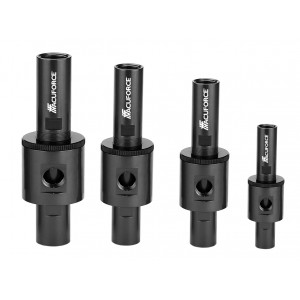
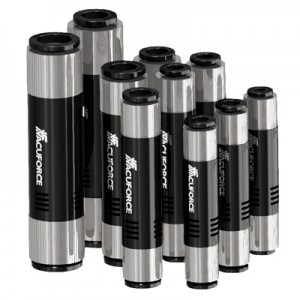
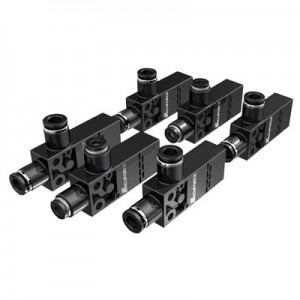
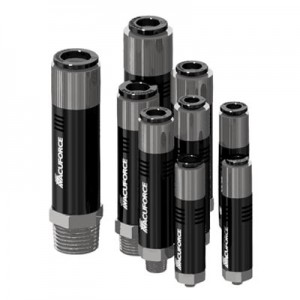
Vacuum Venturi Generators & Vacuum Ejectors
Vacuum venturi generators, also known as vacuum ejectors or vacuum generators, create vacuum using compressed air rather than an electric vacuum pump. They are one of the most widely used vacuum technologies in industrial automation because they are compact, reliable, virtually maintenance free and easy to integrate into machinery.
Vacuum venturi generators are commonly used with vacuum suction cups for robotic pick-and-place systems, packaging equipment, CNC router loading systems, palletizing equipment, carton handling, sheet metal transfer, plastic part handling and general factory automation. Their simple design contains no moving parts, making them extremely reliable in demanding industrial environments.
Download Vacuum Venturi Datasheet PDF
What Is a Vacuum Venturi Generator?
A vacuum venturi generator is a device that converts compressed air into vacuum using the Venturi principle. As compressed air passes through a precisely machined nozzle, air velocity increases and pressure decreases, creating vacuum at the suction port. This vacuum can then be used to grip products using vacuum cups or perform other vacuum handling tasks.
Unlike electric vacuum pumps, venturi generators require no motors, lubrication or complex maintenance procedures. This makes them particularly attractive for machine builders, automation integrators and OEM equipment manufacturers.
How Does a Vacuum Venturi Work?
Compressed air enters the venturi nozzle and accelerates through a restriction. This high-speed airflow creates a low-pressure zone which generates vacuum. The generated vacuum is connected to vacuum cups, grippers or vacuum tooling to hold and move products.
The exhausted compressed air then leaves through the exhaust port. Because vacuum generators rely on compressed air flow, proper sizing and adequate airflow are important for achieving the desired vacuum level and evacuation speed.
Single Stage vs Multi-Stage Vacuum Generators
Vacuum generators are available in single-stage, dual-stage and multi-stage designs.
- Single Stage Venturi: Simple and compact, often used where higher vacuum levels and lower flow requirements are needed.
- Dual Stage Venturi: Improved efficiency and vacuum generation compared to many single-stage designs.
- Multi-Stage Venturi: Provides higher vacuum flow and improved compressed air efficiency, making them ideal for porous products, carton handling, palletizing systems and applications using multiple suction cups.
Multi-stage vacuum generators are often preferred in modern automation because they generate more vacuum flow for a given air consumption, resulting in faster evacuation times and improved energy efficiency.
Why Use a Vacuum Inlet Filter?
Vacuum venturi generators contain precision internal nozzles and small orifices that can become blocked by dust, cardboard fibers, wood particles or other debris. A vacuum inlet filter should always be installed between the vacuum cups and the venturi generator to protect the ejector and maintain long-term performance.
A properly sized vacuum filter helps prevent downtime, protects the venturi from contamination and improves overall system reliability.
Common Applications for Vacuum Venturi Generators
- Robotic pick-and-place automation
- Packaging machinery
- Carton handling systems
- CNC router loading and unloading
- Sheet metal handling
- Plastic part handling
- Glass handling
- Palletizing systems
- Bag and sack handling
- End-of-arm vacuum tooling
Why Choose a Venturi Instead of a Vacuum Pump?
- No moving parts
- Virtually maintenance free
- Compact installation
- Fast vacuum response
- Easy integration into machinery
- No electrical wiring required
- Suitable for harsh industrial environments
- Available with vacuum switches, blow-off and energy-saving functions
Advanced Vacuum Generator Features
Modern vacuum generators are available with integrated vacuum sensors, blow-off valves, vacuum monitoring, energy-saving controls and communication capabilities. These features help reduce compressed air consumption while improving machine productivity and vacuum system reliability.
Frequently Asked Questions
What is a vacuum venturi generator?
A vacuum venturi generator is a compressed-air-powered device that creates vacuum using the Venturi principle. It is commonly used with suction cups in industrial automation and material handling systems.
What is the difference between a vacuum venturi and a vacuum pump?
A vacuum venturi uses compressed air to generate vacuum and contains no moving parts. A vacuum pump uses an electric motor and mechanical pumping mechanism to generate vacuum.
Why are vacuum venturi generators used in automation?
Venturi generators are compact, reliable, maintenance free and easy to install. They are commonly used for robotic pick-and-place, packaging machinery and vacuum gripping applications.
What is a multi-stage vacuum generator?
A multi-stage vacuum generator uses multiple venturi stages to improve vacuum flow and compressed air efficiency. They are often used for porous products, carton handling and applications requiring higher vacuum flow.
Do vacuum venturi generators require maintenance?
Very little maintenance is normally required because there are no moving parts. However, vacuum inlet filters should be inspected regularly to prevent contamination from entering the generator.
Why should I use a vacuum filter with a venturi generator?
A vacuum filter prevents dust, cardboard fibers, wood particles and debris from entering the small internal nozzles of the venturi generator, helping maintain performance and reliability.
Can a vacuum venturi lift heavy products?
Yes. The lifting capacity depends on vacuum level, vacuum flow, suction cup size, product surface condition and the number of vacuum cups being used.
How do I choose the correct vacuum generator?
Selection should be based on product porosity, suction cup quantity, required evacuation speed, vacuum level, compressed air availability and overall system performance requirements.

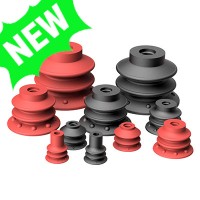 .pf-double-bellows-suction-cups-category{ font-family:Arial,Helvetica,sans-..
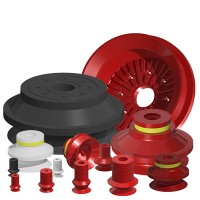 Single Bellows Vacuum Cups for Carton Handling, Paper Products & Inject..
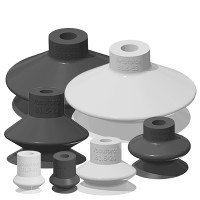 .vf-red-category{width:100%;font-family:Arial,Helvetica,sans-serif;line-hei..
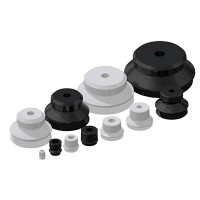 .vf-red-category{width:100%;font-family:Arial,Helvetica,sans-serif;line-hei..
 .vf-red-category{width:100%;font-family:Arial,Helvetica,sans-serif;line-hei..
 .pf-multi-bellows-cups-category{ width:100%; font-family:Arial,Helvetic..
 .vf-red-category{width:100%;font-family:Arial,Helvetica,sans-serif;line-hei..
 .vf-red-category{width:100%;font-family:Arial,Helvetica,sans-serif;line-hei..
 .vf-red-category{width:100%;font-family:Arial,Helvetica,sans-serif;line-hei..
 .vf-red-category{width:100%;font-family:Arial,Helvetica,sans-serif;line-hei..
 .vf-red-category{width:100%;font-family:Arial,Helvetica,sans-serif;line-hei..
 .vf-red-category{width:100%;font-family:Arial,Helvetica,sans-serif;line-hei..
 .vf-red-category{width:100%;font-family:Arial,Helvetica,sans-serif;line-hei..
 .vf-red-category{width:100%;font-family:Arial,Helvetica,sans-serif;line-hei..
 .vf-red-category{width:100%;font-family:Arial,Helvetica,sans-serif;line-hei..
 .vf-red-category{width:100%;font-family:Arial,Helvetica,sans-serif;line-hei..
 .pf-round-foam-suction-cups-category{ font-family:Arial,Helvetica,sans-seri..
 .pf-rectangular-foam-suction-cups-category{ font-family:Arial,Helvetica,s..
 .pf-pneumatic-components-category{width:100%;font-family:Arial,Helvetica,sa..
 .pf-pneumatic-components-category{width:100%;font-family:Arial,Helvetica,sa..
 .pf-pneumatic-components-category{width:100%;font-family:Arial,Helvetica,sa..
 .pf-pneumatic-components-category{width:100%;font-family:Arial,Helvetica,sa..
 .pf-pneumatic-components-category{width:100%;font-family:Arial,Helvetica,sa..
 .pf-pneumatic-components-category{width:100%;font-family:Arial,Helvetica,sa..
 .vf-red-category{width:100%;font-family:Arial,Helvetica,sans-serif;line-hei..