
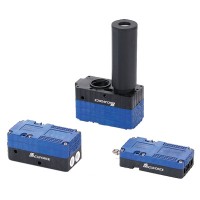
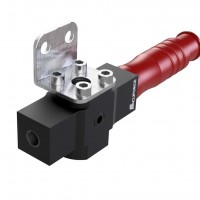
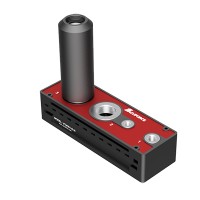
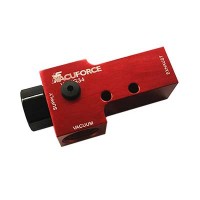
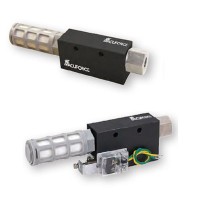
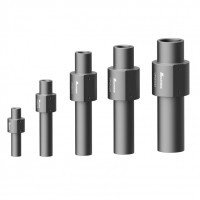
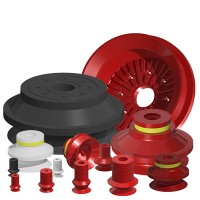
Two Stage Vacuum Venturi Generators
Two Stage Vacuum Venturi Generators are designed for industrial vacuum and pneumatic automation applications. These compact plastic body vacuum venturi generators use a two stage venturi technology which offers very good vacuum flow compared to the compressed air being used. With integral silencers, these units can be placed directly on suction cups or be used in a centralized vacuum installation.
Vacuforce supports machine builders, integrators and maintenance teams with application-focused vacuum and pneumatic components for industrial automation.
Download Technical Datasheet PDFWhat Are Two Stage Vacuum Venturi Generators?
A vacuum venturi generator uses compressed air accelerated through an internal nozzle to create a low-pressure region and vacuum flow. Venturi generators are compact, have no rotating pumping elements and can be installed close to suction cups or vacuum tooling for fast response.
Key Features
- Compressed-air-powered vacuum generation
- No electric motor or rotating vacuum pump at the point of use
- Compact installation close to suction cups or tooling
- Available in inline, manifold, cartridge, box and multistage configurations
- Suitable for decentralized or centralized vacuum architectures depending on flow requirements
Typical Applications
- Robotic pick and place
- Packaging machinery
- Suction cup handling systems
- End-of-arm vacuum tooling
- Material transfer and conveying where the selected model is suitable
- General machine automation
Selection Guidance
Choose a vacuum generator according to required vacuum flow, achievable vacuum level, evacuation time, compressed air availability, port configuration, number of cups and expected leakage. Porous loads generally require more flow than smooth, non-porous surfaces.
Application Tip: Final selection should be based on the actual product, machine cycle, operating environment and required pneumatic or vacuum performance. Confirm model-specific ratings before installation.
Decentralized vs. Centralized Vacuum
Decentralized venturis are installed close to individual cups or tooling for quick response. Centralized systems use a larger generator to supply several vacuum points and can simplify control in higher-flow applications.
Why Use This Product Family?
A vacuum venturi generator uses compressed air accelerated through an internal nozzle to create a low-pressure region and vacuum flow. Venturi generators are compact, have no rotating pumping elements and can be installed close to suction cups or vacuum tooling for fast response. Selecting the correct configuration can simplify machine integration, improve serviceability and provide more consistent application performance.
Frequently Asked Questions
How does a venturi vacuum generator work?
Compressed air passes through a nozzle and creates a low-pressure region that draws air from the vacuum port.
Why use a venturi instead of a mechanical vacuum pump?
Venturis are compact, have no rotating pumping elements and can be installed directly on automation equipment.
How do I size a vacuum generator?
Consider the number and size of suction cups, system volume, leakage, required evacuation time, vacuum level and compressed air supply.
Are venturi generators suitable for porous products?
They can be, but porous products generally require higher vacuum flow. Generator selection should account for expected leakage.
Where should the generator be installed?
Installing close to the vacuum application can reduce line volume and improve response time.
Do venturi generators require maintenance?
They are generally low-maintenance, but clean compressed air and periodic inspection help prevent contamination of internal passages and silencers.